Well, my blog's finished. It's been a long journey but our group has overcome any problems, from trees to leg operations. I've enjoyed the project and I'm very proud of the final sequence and the work surrounding it. I hope you enjoy the blog.
Bye!
Thursday, April 1, 2010

Monday, March 29, 2010
Plot synopsis of the opening sequence
The film begins with a girl bringing in the last boxes into her new home after moving in. However, it is revealed to the audience that there is a disabled (or possibly injured) man in the cellar of the house. As he hears her enter he prepares to go upstairs.
Meanwhile, the girl goes into the kitchen and takes out the kettle and mug from a box before realising that a plant needs to be taken outside. Whilst she does this, the man enters the kitchen and watches her, before leaving again as she returns. Upon coming back inside, the girl realises that the mug has been knocked over. As she thinks about this, she hears the cellar door creak and goes inside to investigate.
In the cellar she discovers a candle-lit desk covered in jars and photos; she decides to turn over one of these photos and realises that its a picture of her taken from many years ago. She retreats in terror before spinning to see the legs of the man at the top of stairs.
The title appears and it is left ambiguous as to what happens to her.
Meanwhile, the girl goes into the kitchen and takes out the kettle and mug from a box before realising that a plant needs to be taken outside. Whilst she does this, the man enters the kitchen and watches her, before leaving again as she returns. Upon coming back inside, the girl realises that the mug has been knocked over. As she thinks about this, she hears the cellar door creak and goes inside to investigate.
In the cellar she discovers a candle-lit desk covered in jars and photos; she decides to turn over one of these photos and realises that its a picture of her taken from many years ago. She retreats in terror before spinning to see the legs of the man at the top of stairs.
The title appears and it is left ambiguous as to what happens to her.
In what ways does your media product use, develop or challenge forms and conventions of real media products?
Our sequence is the opening 2-3 minutes of a horror/thriller film. It follows Todorov's theory of a classic narrative pattern (an equilibrium, followed by a disruption). A girl is moving into her home when she is found by the killer in the basement (time 2:30).

This is the disruption at the start of the narrative following the equilibrium of her moving in. By the end of the film the equilibrium will be restored (albeit a new one). Our sequence also follows the usual form of an opening sequence; the setting is established, characters are introduced and the narrative begins.


Of course, our background music is eery and spooky and therefore similar to that used in real horror films. The music is slow at first before building up as the tension grows before stopping sharply as the girl sees the villain; the abrupt ending to the music fits the action on screen.

This is the disruption at the start of the narrative following the equilibrium of her moving in. By the end of the film the equilibrium will be restored (albeit a new one). Our sequence also follows the usual form of an opening sequence; the setting is established, characters are introduced and the narrative begins.
However, many horror films (such as Jeepers Creepers and Friday the 13th) end with the villain still on the loose and therefore the equilibrium is only momentary. There are also several binary opposites present that fit into Levi-Strauss' theory:
light upstairs in the world of the girl - the dark basement
good - evil
female – male
Although the villain is disabled, he is above her at the top of the stairs and therefore is dominating. It challenges the conventions of media products by having our villain being disabled, since usually the villains are more physically powerful than the protagonists in films.


Sometimes the victim is disabled in order to appear more vulnerable, for example in Rear Window and Misery. This, however, is far more common than the villain being disabled.


One case of a disabled villain is in Casino Royale, in which the villain is asthmatic. We have used the disability of the villain as a twist in the story and as a result have a created a more intelligent, methodical killer as opposed to one that is physically dominant (time from sequence). By doing this we have challenged the media convention that the villains are physically superior. We have taken inspiration to do this from films such as The Dark Night (the appearance of our villain, including make-up and clothes, is taken form Heath Ledger’s joker) and Se7en.

Of course, our background music is eery and spooky and therefore similar to that used in real horror films. The music is slow at first before building up as the tension grows before stopping sharply as the girl sees the villain; the abrupt ending to the music fits the action on screen.
How does your media product represent particular social groups?
This is an independent (or indie) production, shown by the style in which the girl is shown; her clothes demonstrate this to the audience. Our sequence represents the indie teenage girl, most likely from Britain.

Although we do not show much of their personalities, we represent the male dominance; he is above her on the stairs and is in complete control.
We also represent disabled people as not being vulnerable. Here the villain is on crutches but is still able to take control and be more powerful that the girl, even though she is not disabled. We have demonstrated that physical prowess isn’t always better.
What kind of media institution might distribute your media product and why?
In my opinion, a small British independent institution would be likely to distribute the film because it is a low-budget British film and institutions such as these specialise in distributing this type of film.

As well as this, the production and distribution companies (Black Cat Productions and Fallen Tree Studios) sound like British independent companies, something that reflects the film itself and the social groups portrayed. Interesting, the majority of our audience feedback tells us that those who've seen it think the film would be shown in a multiplex cinema (such as a Cineworld); this is surprising as our film was hypothetically intended to be shown at an independent cinema such as the Rio Cinema.
(Our Fallen Tree ident 0:05. Below are four stages of the ident to illustrate)


Taking inspiration from the film Paranormal Activity and their revolutionary "Demand it!" online campaign, I think the film could be marketed with an original (albeit similar) online campaign that could target our audience. For example, short trailers could be placed on websites that are associated with independent cinema such as FilmLondon and Alternative Cinema in order to get attention. As well as this, fans of the trailer would then have to demand screenings in their local independent cinema (for example The Phoenix) and this would make sure that the film would get through to our intended target audience.

Who would be the audiences for your media product?
The target audience for our product would be young British adults between the ages of 15 and 25. Our film would be rated 15 to ensure that we reach these people. We are also aware that there are other horror films that have a similar target audience and therefore the same certificate, such as Paranormal Activity.


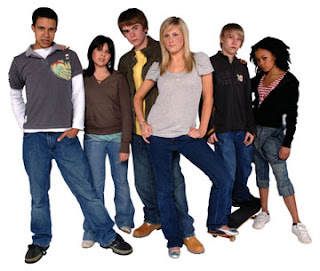


It is most likely that our production will attract indie teenagers over 15 because our film begins with a character that is within this social group and so this character is relatable to people who will then want to watch the film. The majority of our audience feedback came from teenagers aged 16 who said that they enjoy a wide range of films.

How did you attract/address your audience?
We attracted our target audience by featuring characters that fit within their social groups in our film. As the uses and gratifications theory shows, people are willing to pay money in order to see a film that interests them. From our film the target audience will see a film involving people like them, whilst at the same time be able to enjoy a horror film that will make them jump and scare them.
Footage taken from a screening:
Our audience have a diversity in favourite film genres, therefore we thought that finding a common online website would be a wise way to target our audience. Groups, pages and events on Facebook allowed us to keep our audience up to date with screenings and directly targets them since only those interested in watching films such as this will click to attend the event. This use of technology helps us to market our sequence, as well as other websites such as Youtube.

Subscribe to:
Posts (Atom)
